
If you've read our earlier blogs on recovery, hydration and muscle health for women over 40, you'll already know that your body starts to play by a slightly different set of rules.
Recovery takes longer. Energy can feel less consistent. And even when you're doing all the "right" things—training regularly, eating well, staying hydrated—something can still feel… missing.
One often overlooked piece of the puzzle is how your body responds to increased fluid loss during this stage of life.
Why Hydration Becomes More Complex in Your 40s and 50s
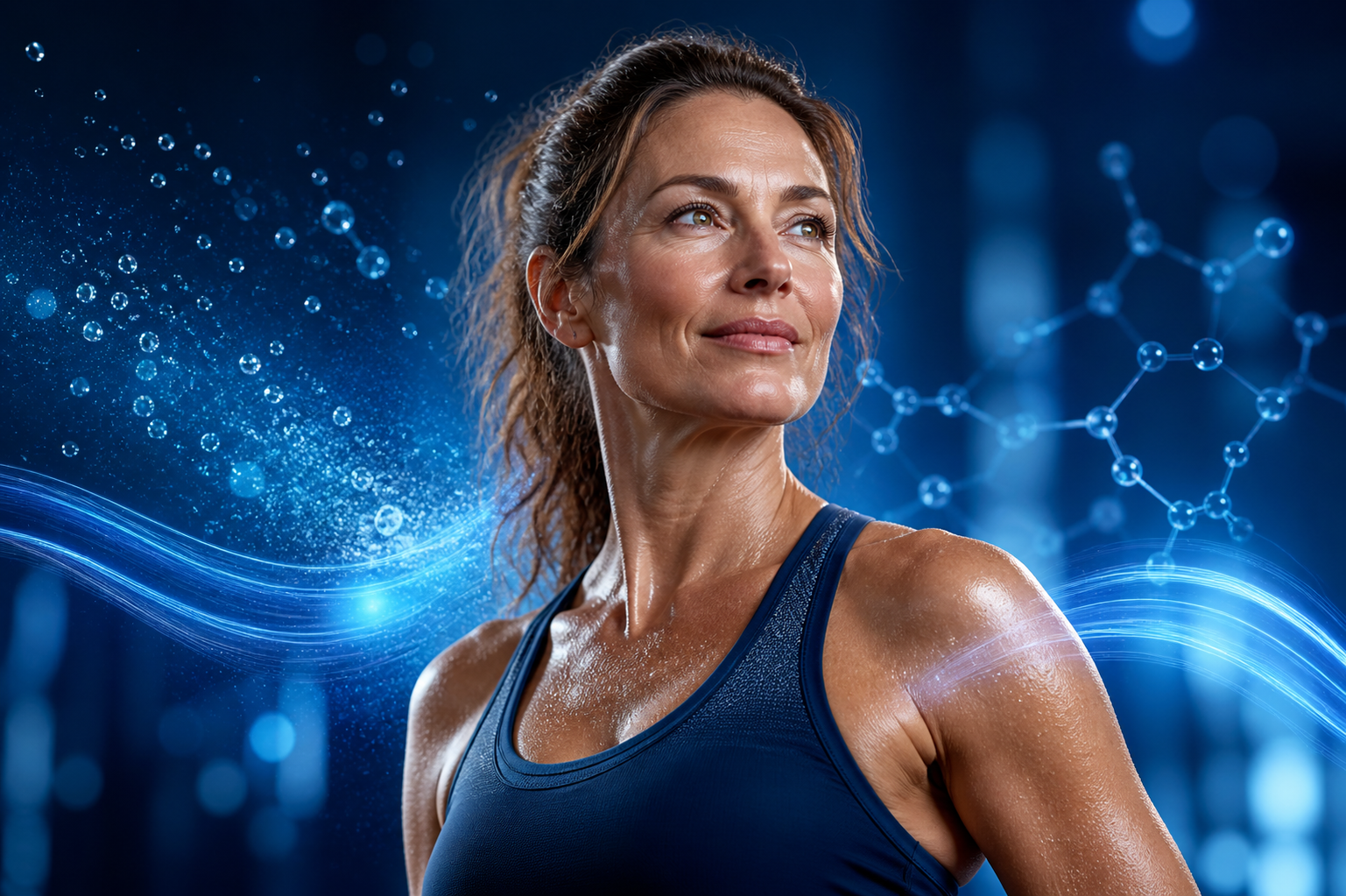
Many women begin to notice changes in how their bodies regulate temperature. This can show up as increased sweating, including hot flushes or night sweats, which may disrupt sleep and lead to greater fluid loss over 24 hours.
Most advice focuses on replacing fluids and electrolytes—and that's important. But hydration is not just about water and minerals. There's a third, often overlooked component: amino acids.
Introducing High-Demand Amino Acids (HDAAs)
In our previous blog on HDAAs, we explained how certain amino acids become "high-demand" during periods of stress, exercise, and recovery.
But here's where things become especially relevant for women in midlife: when your body is experiencing increased fluid loss, disrupted sleep, and changes in recovery capacity, the demand for these amino acids can rise—even if your diet hasn't changed.
This is where HDAA supplementation can make a meaningful difference.
The Hidden Link Between Sweating and Amino Acid Loss
Sweat doesn't just contain water and electrolytes—it can also lead to the loss of small amounts of amino acids. While the losses may seem minor in isolation, they can add up over time, particularly when combined with regular exercise, reduced recovery efficiency, increased daily stress, and changes in protein metabolism.
The result? Your body may struggle to keep up with the demands of muscle repair, hydration balance, and overall vitality.
Why HDAAs Matter More Now Than Ever
HDAAs play a critical role in several processes that become increasingly important during this stage of life:
1. Muscle Maintenance and Recovery
Maintaining lean muscle becomes more challenging with age. HDAAs provide the building blocks your body needs to repair and preserve muscle tissue—especially after workouts.
2. Hydration Support at a Cellular Level
Amino acids assist with fluid balance inside cells, supporting more effective hydration than water alone.
3. Skin and Structural Support
If you're already using collagen supplements, it's worth noting that amino acids are the fundamental components that support collagen structure in the body.
4. Energy and Resilience
When recovery is compromised, energy levels often follow. Supporting amino acid availability can help your body bounce back more efficiently.
Beyond Collagen: A Broader Approach to Vitality
Many women are already familiar with collagen for skin, joints and general wellness. But collagen is just one piece of the picture.
HDAAs offer a more targeted and functional approach, helping to support muscle recovery, hydration balance, daily energy, and overall resilience. Rather than replacing what you're already doing, amino acid supplementation can complement—or in some cases simplify—your routine.
What to Look for in an Amino Acid Supplement
If you're considering adding HDAAs to your daily routine, look for products that align with your lifestyle and values: clean, sugar-free formulations; vegan-friendly options; scientifically supported amino acid profiles; and easy-to-use formats that fit into a busy day.
Bringing It All Together
As we've explored across our recent blogs, supporting your body through your 40s and 50s isn't about doing more—it's about doing what works.
Hydration is no longer just about water. Recovery is no longer just about rest. And nutrition is no longer just about protein intake.
By understanding the role of High-Demand Amino Acids, you can take a more complete approach to supporting your body—helping you stay strong, energised and balanced through life's changes.
Final Thought
When your body is asking for more support—whether through increased sweating, slower recovery, or fluctuating energy—HDAAs help fill the gap.
Because feeling your best isn't about pushing harder. It's about supporting your body smarter.
The science behind age-related muscle loss and how HDAA help combat sarcopenia is detailed in our research précis: Combating Sarcopenia: How HDAAs Support Muscle Integrity in Ageing Adults.
Compartir:
Aminoácidos para el entrenamiento: El eslabón perdido en la recuperación muscular
Chase Patersen is performing and training hard: his heart is set on the Olympics