


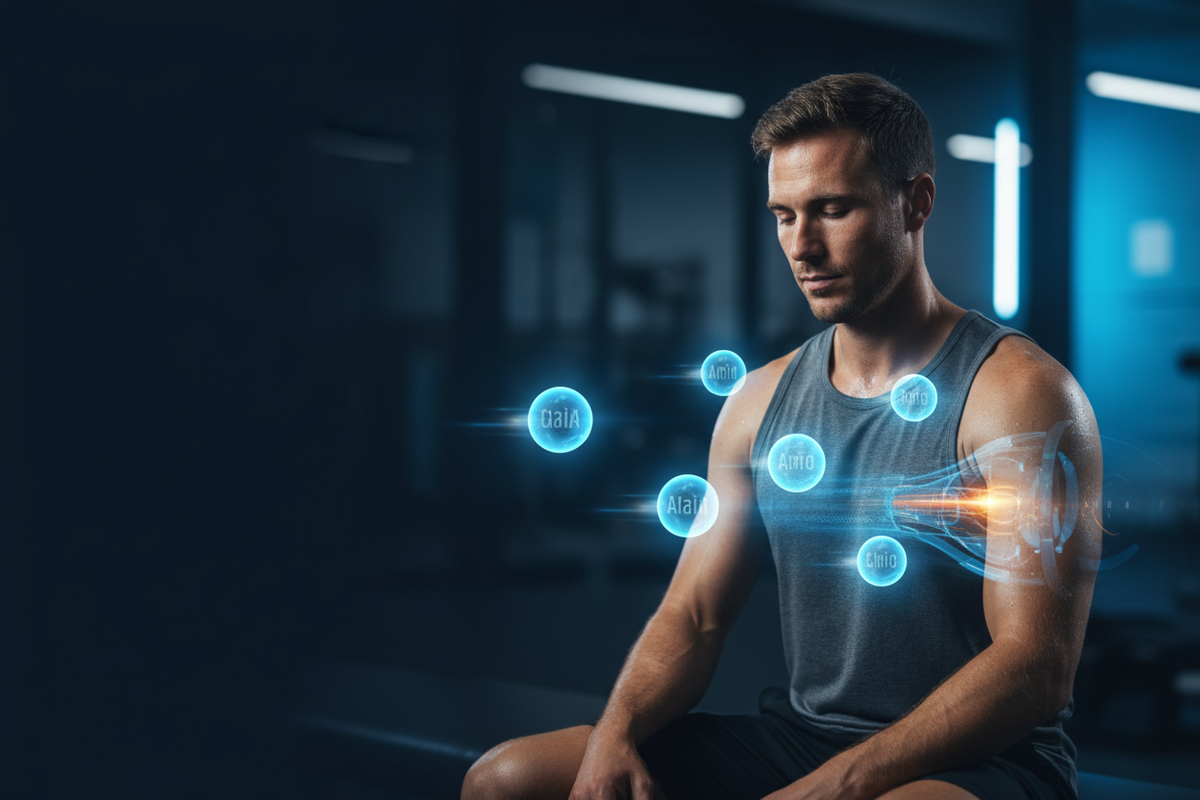
HDAA and protein powder support recovery in different ways. Protein powder provides a broad supply of amino acids and can help meet total daily protein needs. HDAA, including histidine, lysine and ornithine, are designed to provide more targeted support around the recovery demands created by exercise, sweat loss and physical stress.
For many active people, the most useful approach is not choosing one or the other. It is understanding when targeted HDAA support and broader protein intake each have a role.
HDAA vs protein powder
| HDAA, such as OptimAAte | Protein powder, such as whey | |
|---|---|---|
| Primary role | Targeted amino-acid support around exercise and recovery | Convenient source of complete protein |
| Serving concept | Small, targeted serving | Larger protein serving |
| Key focus | Histidine, lysine, ornithine and other HDAA | Broad amino-acid and protein intake |
| Ornithine | Included in the HDAA approach | Not present in protein powders |
| Best suited to | Early recovery support and demanding exercise routines | Meeting daily protein requirements |
| Relationship to the other | Can complement protein intake | Does not replace targeted HDAA support |
Why the difference matters
A 30g serving of whey protein may be useful when your overall diet needs more protein. However, it is a larger whole-protein serving that must be digested before its amino acids become available.
OptimAAte is designed differently. Its smaller serving focuses on specific HDAA associated with exercise demand and recovery. Histidine and lysine are essential amino acids, while ornithine is a non-protein amino acid involved in exercise metabolism and nitrogen handling.
That means the comparison is not simply 2g versus 30g. It is targeted recovery support versus total protein provision.
The practical answer
Use protein powder when you need a convenient way to increase total protein intake. Consider OptimAAte when you want targeted HDAA support around demanding exercise, heat, sweat loss or a short recovery window.
If your training load is high, you may use both: OptimAAte as part of the recovery routine and whey or food-based protein to help meet broader daily protein needs.
Internal link:
Compartir:
The Recovery Window Is Shorter Than You Think — And Amino Acids Are Why