


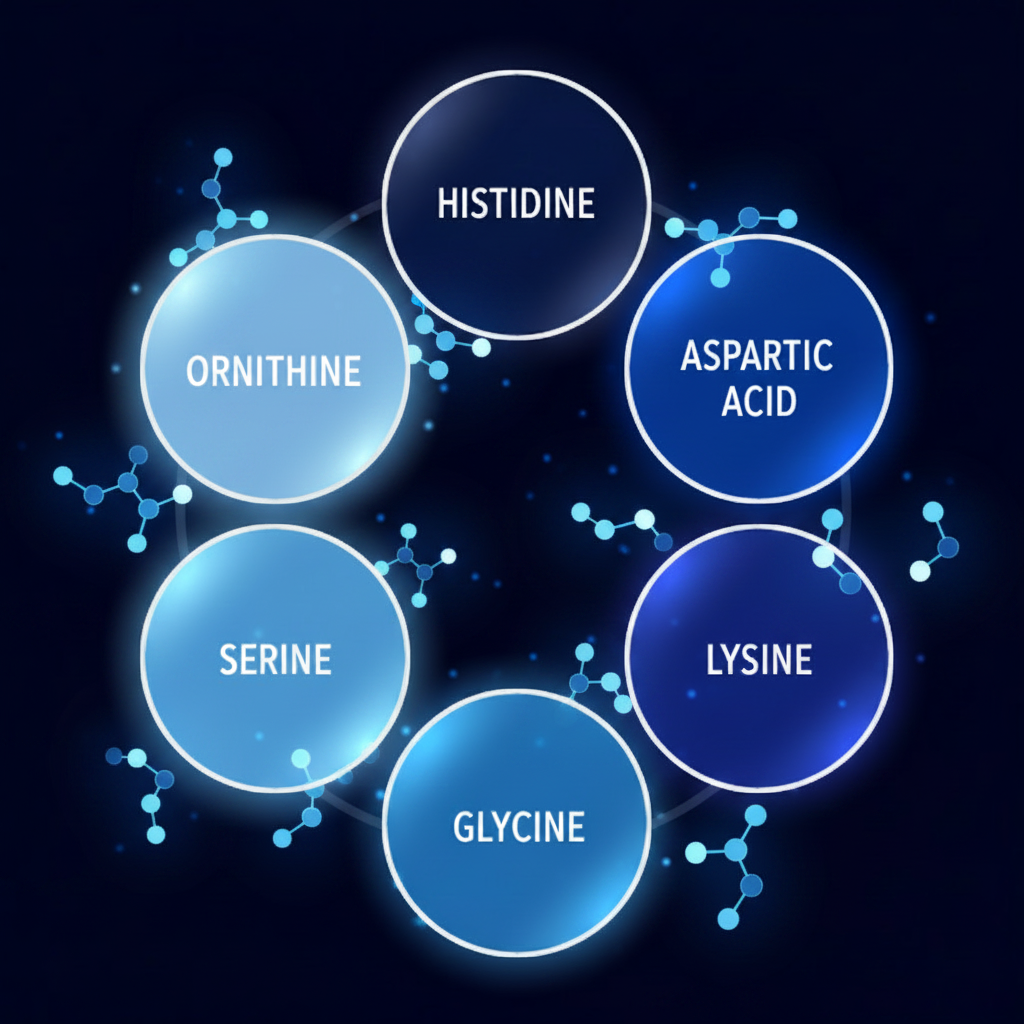
High-Demand Amino Acids, or HDAA, are six amino acids that InnovAAte focuses on the context of exercise, sweat loss, metabolism and recovery. They are histidine, glycine, serine, lysine, aspartic acid and ornithine.
The HDAA concept is based on a practical question: when physical demand increases, are athletes replacing all of the nutrients involved in maintaining performance and recovering between efforts, or are they focusing only on fluid, electrolytes and energy?
Which amino acids are included?
The six HDAA are:
-
Histidine
-
Glycine
-
Serine
-
Lysine
-
Aspartic acid
-
Ornithine
Amino acids are commonly discussed in relation to muscle protein, but their relevance extends beyond muscle size. They are involved in nerve transmission,, structural maintenance, metabolism and the broader processes required to recover from physical stress.
Why do endurance athletes need to think beyond protein?
Protein is important, but the body does not use protein as a single undifferentiated substance. It breaks protein down into amino acids, which are then used in different tissues and systems.
The HDAA are lost at disproportionately faster rates than the other amino acids, so you still need to specifically replace the HDAA, or eat very large amounts of protein to fully replenish.
An athlete may consume adequate total protein and still need to think about what happens during long exercise, repeated training, heat exposure and short recovery windows. During those periods, nutritional demand can increase while sweat and metabolism contribute to nutrient losses and turnover.
The key point is that proteins need to be digested to release the amino acids for use by the body. It can take several hours for the digestive track to re-establish full function after exercise. While you are waiting for the proteins to digest, the body keeps breaking down muscle proteins to support recovery processes. This leads to a longer recovery phase to rebuild the muscle proteins.
That is the reason HDAA are relevant to endurance athletes, team-sport competitors, active workers and anyone regularly training under demanding conditions.
HDAA and the complete support stack
HDAA are not a replacement for hydration, electrolytes or energy. They complement them.
A practical performance-support strategy may include:
-
Fluid to support hydration
-
Electrolytes to help replace sweat-related losses
-
Energy to support prolonged activity
-
HDAA to support the amino-acid demands associated with exercise and recovery
This is the thinking behind pairing ElectrAAte with OptimAAte. ElectrAAte is positioned around exertion, while OptimAAte is positioned around daily support and recovery.
Who should pay attention to HDAA?
The question is particularly relevant if you:
-
Train for long-distance running, cycling or triathlon
-
Play tennis or other sports with repeated matches
-
Train early in the morning and again the next day
-
Exercise in hot or humid conditions
-
Experience recurring soreness or fatigue after demanding sessions
-
Want a low-sugar, science-led alternative to conventional sports drinks
HDAA are not a magic shortcut. They are one part of a broader nutritional strategy designed to help active people support the systems that allow them to perform again.
Internal link:
HDAA and Muscle Recovery: What High-Demand Amino Acids Mean for Exercise
Compartir:
Do hydration, electrolytes and energy sources complete an endurance nutrition plan?