


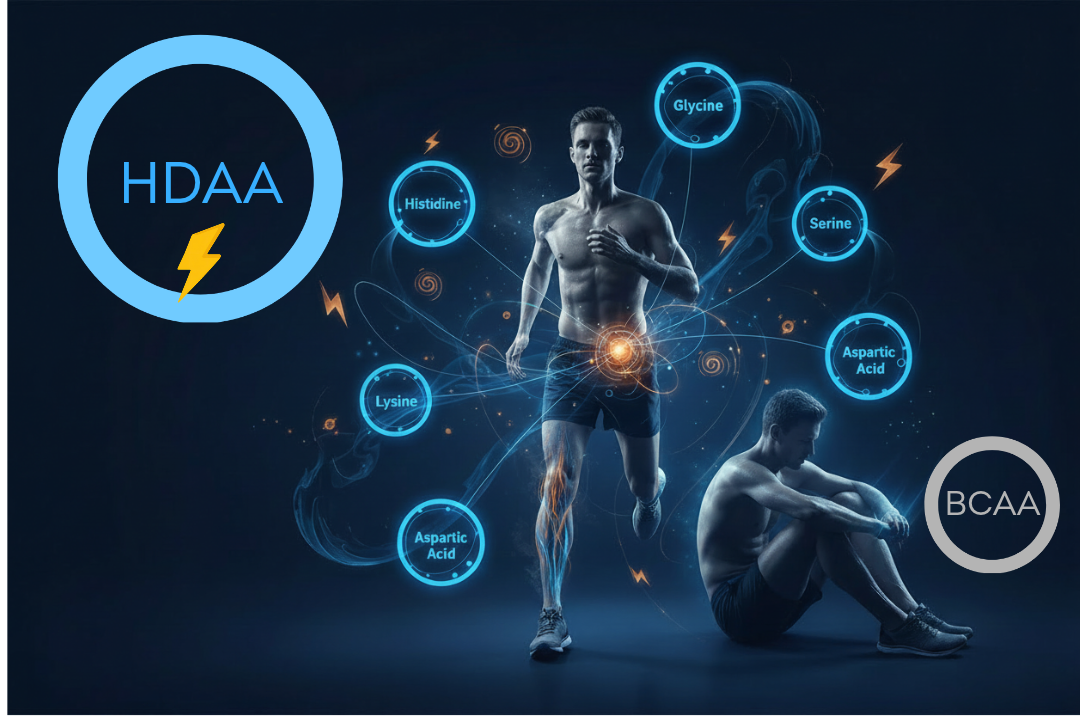
HDAA and BCAAs are not interchangeable terms. BCAAs are three branched-chain amino acids: leucine, isoleucine and valine. HDAA refers to six different amino acids: histidine, glycine, serine, lysine, aspartic acid and ornithine.
The key difference is the nutritional question each approach is trying to address. BCAA products typically focus on a small group of branched-chain amino acids. The HDAA approach looks more broadly at the amino acids associated with exercise demand, sweat loss, metabolism and recovery.
What are BCAAs?
BCAAs are widely used in sports nutrition. They are commonly marketed to people interested in muscle training, protein synthesis and recovery.
That does not make them irrelevant to endurance athletes. However, endurance exercise creates demands beyond a single muscle-building objective. Long sessions also involve hydration, electrolytes, energy production, heat management, concentration and the ability to recover before the next effort.
What are HDAA?
HDAA are the six amino acids that form the foundation of InnovAAte’s amino-acid approach:
-
Histidine
-
Glycine
-
Serine
-
Lysine
-
Aspartic acid
-
Ornithine
The focus is not simply on adding more amino acids. It is on considering the wider nutritional support stack required during exertion and recovery.
Which approach is better for endurance athletes?
There is no universal answer because BCAAs and HDAA are not identical products designed for exactly the same purpose.
A useful way to think about the difference is:
-
BCAAs focus on three branched-chain amino acids
-
HDAA focus on six amino acids selected around InnovAAte’s exercise, sweat and recovery framework
-
Endurance nutrition also needs fluid, electrolytes and energy
-
The best strategy depends on the type of exercise, duration, heat, training load and recovery demands
For an endurance athlete, the bigger question may not be “HDAA or BCAAs?” It may be whether the overall plan supports hydration, electrolytes, energy and amino-acid demand together.
Where InnovAAte fits
ElectrAAte is designed to fit into an existing hydration and energy routine during exertion. OptimAAte is designed for daily support and recovery.
That makes the products relevant to athletes who are not looking for a short-term stimulant, but for a broader strategy that supports training today and recovery before the next session.
Internal link: HDAA vs BCAA: Why High-Demand Amino Acids Are a Different Choice
Share:
What Are High-Demand Amino Acids? An HDAA Guide for Exercise and Recovery