


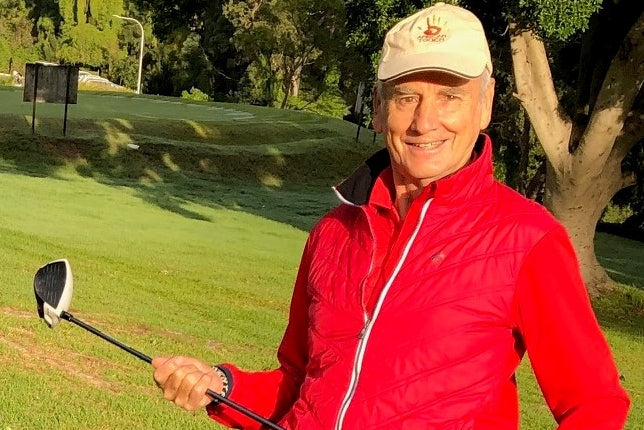
Written by Emeritus Professor Tim Roberts AM FRSN, Director of InnovAAte Pty Ltd
Referee Goes Down at World Cup.
Watching Australia play the US spurred me to review the importance of proper hydration for all of us, no matter what our age, level of exercise or daily lifestyle. I watched as one of the referees collapsed with muscle cramping, a situation we see all too often with the cricketers in midsummer, and a situation that some of us suffer routinely during the night. Even though our body is 60% water by weight or 98% water in terms of the number of molecules, if we lose more fluid than is taken in, then there is not enough water for normal body functions.
Exercise Smarter. Recover Better. Keep Doing What You Love.
Staying active as you get older is one of the best things you can do for your body and mind — but it can feel different to how you did in your 20s or 30s. Whether you keep active with a brisk daily walk, you're training for a Masters event, or simply chasing the grandkids around the yard, your body works hard to keep up. And that means your hydration, recovery, and performance need that little bit more attention.
Every time you sweat — whether from exercise, warm weather, or daily activity — your body loses more than just water and salt. It loses a unique group of amino acids called High-Demand Amino Acids (HDAAs) and specific electrolytes, potassium, magnesium and calcium.
These vital nutrients support exercise and keep your muscles in good shape, build energy systems, repair soft tissues and joints, and maintain overall vitality.
Dehydration
We can lose 0.5 to 2L of sweat per hour depending on how hot it is and the intensity of the exercise — and of course, genetics play a role as well, with some people sweating at much faster rates than others. You only need to lose 2% of your body weight in fluid (that's 1.5L for a 75Kg person) to end up with cramps, muscle pain, fatigue and reduced coordination. This is more relevant as you get older. You think because you are not doing as much, you don't need to keep up with the fluids. It is vital to maintain good hydration.
Fun fact
If you are sitting in the crowd watching soccer, tennis or cricket, you are still losing fluids by sweating. Here is the catch: the concentrations of high-demand amino acids and potassium, magnesium and calcium are much higher in the sweat. This means that you still lose significant quantities of these key nutrients just by enjoying yourself in the sun without exercising!
The body supplies its own HDAA to support exercise — at a cost!
Ingesting foods is not a quick fix to provide new amino acid resources for the body — it takes hours for digestion to work, and digestion is not fully functional during exercise (see blog covering digestion). The body deals with an immediate supply of amino acids to support exercise by breaking down muscle proteins to get what it needs — this can slow you down and make staying active harder. The more of your own muscle that you break down, the longer the time is required for recovery processes to rebuild the muscle proteins.
Targeted Muscle Recovery – the Nutritional Support Stack.
Muscle integrity is not just about strength — it is about independence, mobility, and long-term health. From your 50s onward, the physiology of recovery changes. Protein turnover slows. Muscle protein synthesis becomes less responsive. Connective tissue repair takes longer. Yet many active men and women continue to train, compete, and live at full pace — often without adjusting their nutritional strategy.
At InnovAAte, we call this completing the Nutritional Support Stack: Hydration, Electrolytes, Energy, and High-Demand Amino Acids (HDAA). Most active adults manage the first three. The fourth is where performance longevity is won or lost.
High-Demand Amino Acids — histidine, glycine, serine, lysine, aspartic acid and ornithine — are lost in meaningful quantities through sweat and metabolism. These amino acids underpin: Muscle repair; Structural integrity of joints and connective tissue; Efficient metabolic recovery; and Long-term muscle mass preservation.
For master's athletes, regular golfers, competitive swimmers, tennis players, gym-goers — and anyone who values staying active — replacing what your body actually uses is not optional. It is strategic. This is not about chasing stimulation. It is about reinforcing the physiological systems that allow you to:
Recover faster between training sessions
Maintain lean muscle mass
Support joint resilience
Sustain vitality and independence
For optimising your retirement and improving health and wellbeing, focus on one principle: Healthy ageing is built on daily recovery.
From our laboratory, we have developed InnovAAte's science-backed formulas to deliver precisely what your body loses most through sweat and exertion. Staying active should feel good — not exhausting. ElectrAAte® and OptimAAte® help you keep your body moving and recovering as it should, so you can spend more time on the track, in the pool, on the bike, or with the grandkids — and less time feeling sore and flat.
The science behind age-related muscle loss and how HDAA help combat sarcopenia is detailed in our research précis: Combating Sarcopenia: How HDAAs Support Muscle Integrity in Ageing Adults.
Listen to a professional podcast by David Curnow discussing how sweat works and how a little knowledge can really help you make gains in exercise performance and recovery.
Share:
Where Are We At With Sweat?
HDAAs vs BCAAs: The Sweat Science of Sodium Loss