
How Muscle Recovery Drinks Can Help You
If you're over 40 and wondering why you feel sorer after tennis, flatter after a gym session, or more fatigued after a long day than you used to, you're not imagining it.
Recovery does change with age.
For active adults focused on healthy ageing, the challenge isn't just fitness. It's physiology:
- Gradual muscle mass decline
- Hormonal shifts
- Altered hydration dynamics
- Increased metabolic stress
Most people respond by refining their hydration strategy. They add better electrolytes. They improve protein intake. They optimise carbohydrates. But there's a critical piece almost everyone misses.
The Missing Link in Most Recovery Drinks
Most recovery drinks focus on fluid replacement, electrolytes (sodium, potassium, magnesium), carbohydrates for energy, and sometimes branched-chain amino acids (BCAA). These are helpful. But they do not address a key biological reality:
During exercise, work in the heat, stress, and even daily life demands, the body loses specific amino acids in higher-than-expected amounts via sweat and metabolism. These are not just “muscle-building” amino acids. They are what we call High-Demand Amino Acids (HDAA).
What Are High-Demand Amino Acids (HDAA)?
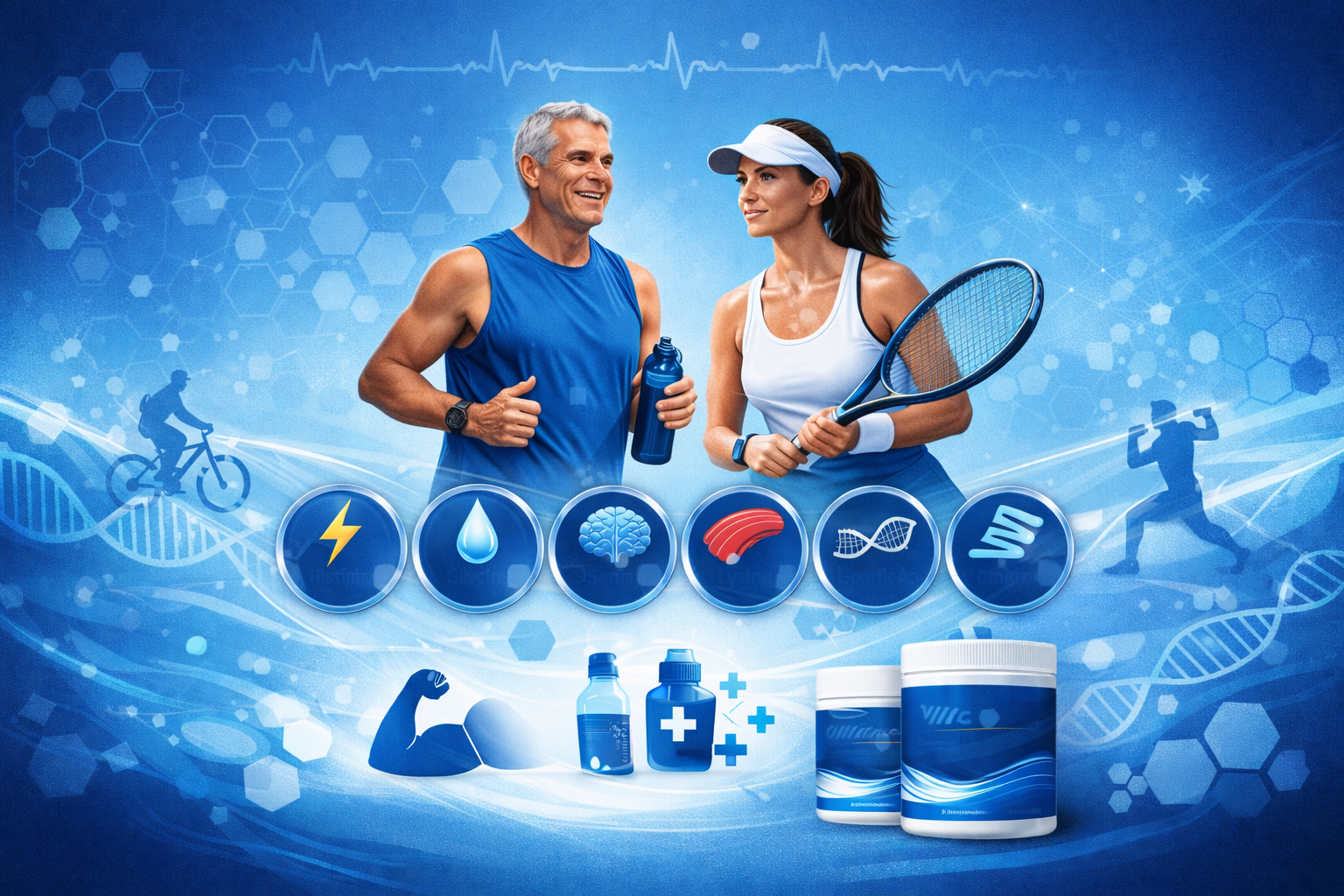
Scientific investigations conducted by the founders of InnovAAte Pty Ltd identified six amino acids that are excreted in disproportionately high quantities during metabolic stress and exercise: Histidine, Glycine, Serine, Lysine, Aspartic acid and Ornithine.
These six HDAA are involved in far more than protein synthesis. They contribute to energy metabolism, acid–base balance, electrolyte regulation, neurotransmission and brain function, detoxification pathways, connective tissue structure, and muscle repair and recovery.
As we age, the efficient recycling and replacement of these amino acids becomes increasingly important. Read more on HDAA here.
Why Recovery Feels Harder After 40
1. Muscle Mass Decline (Sarcopenia)
From our 40s onward, muscle protein turnover becomes less efficient. Even recreational activities — golf, tennis, walking, gym sessions, cycling — create metabolic stress that requires rebuilding. Without adequate amino acid replacement, recovery lags.
2. Hormonal Changes (Especially for Women 40+)
Perimenopause and menopause affect fluid distribution, electrolyte handling, muscle preservation, and energy regulation. Women often optimise iron, calcium, magnesium, and protein intake — yet few address amino acid losses via sweat and metabolism.
3. Hydration Is More Than Water
True cellular hydration depends on enabling osmotic balance, electrolyte gradients, and amino acid availability. HDAA contribute to maintaining this biochemical equilibrium.
The Nutrition Stack: Completing What's Missing
Many active adults already have a support regime: water, electrolytes, and energy (carbohydrates or healthy fats). What's usually missing is replacement of HDAA lost during exercise and metabolic stress.
A well-formulated support stack for active people over 40 should include fluids, electrolytes, energy substrates, and High-Demand Amino Acids. Whether you're playing golf, tennis, running, surfing, cycling, lifting weights, or simply juggling work and family life — the metabolic demand for HDAA is consistent.
Introducing a New Category of Muscle Recovery Drinks
1️⃣ OptimAAte® – Daily HDAA Support
OptimAAte is designed to provide the six HDAA with fluid. It can be taken daily, mixed with water, added to fruit juice or existing drink blends, and supports energy metabolism and general wellbeing. It is ideal for active older adults wanting to maintain muscle integrity and metabolic resilience.
2️⃣ ElectrAAte® – Exercise and Recovery Support
ElectrAAte is formulated to support ongoing exercise, work in hot conditions, and post-exercise recovery. It can be added to existing electrolyte or energy drinks to “top up” HDAA during activity and is especially valuable immediately post-exercise.
Healthy Ageing Is About Recovery
Healthy ageing is not about slowing down. It's about recovering well enough to keep going. Muscle preservation, metabolic balance, and effective hydration determine whether you stay active, maintain independence, continue recreational sport, and enjoy family life without persistent fatigue.
Muscle recovery drinks that ignore HDAA are incomplete. By contrast, targeted HDAA supplementation addresses a fundamental physiological gap — one that becomes increasingly important after 40.
A Scientifically Grounded Difference
The HDAA concept is not marketing-driven. It is based on decades of biochemical research into amino acid losses during exercise and metabolic stress. That research underpins the products developed by InnovAAte Pty Ltd.
For active adults focused on healthy ageing, the message is clear: hydration matters, electrolytes matter, energy matters. But without replacing the HDAA you lose, recovery will continue to feel harder than it needs to.
The science behind age-related muscle loss and how HDAA help combat sarcopenia is detailed in our research précis: Combating Sarcopenia: How HDAAs Support Muscle Integrity in Ageing Adults.
Completing your support stack with HDAA may be the difference between simply getting through your 40s and thriving well beyond them. Buy your HDAA here.
Share:
What your training nutrition mix is missing: HDAA's
Staying Strong Over 50